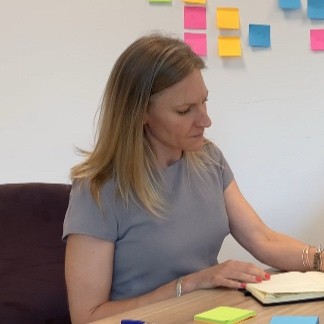
About Matt

A man smuggling psychology into a world overrun by spreadsheets.

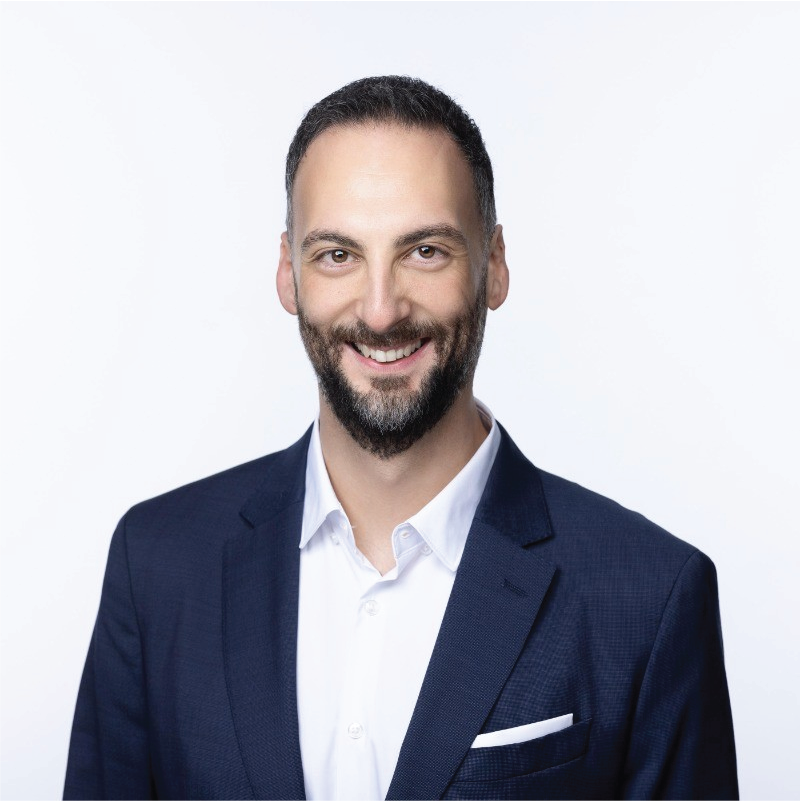
Matt Furness is a business psychologist and behavioural scientist who’s spent over a decade helping 100+ organisations develop their leaders, people and culture.

In 2023, Matt left EY to set up Click. He’s continued supporting businesses while also building a global audience of 30,000+ people through writing and speaking about behavioural science.

Matt’s work aims to challenge the neat, logical stories businesses tell about behaviour and to uncover the messy psychology actually shaping how people act. 

Book Matt  →
Types of session

Matt gives your audience a session they'll quote for months.

Keynotes

Give your conference, all-hands, or off-site a fascinating talk that leaves the whole room thinking like behavioural scientists.

Speaker sessions

Give your organisation, team, or leadership group a session that changes how they see human behaviour for good.

Panels

Get a credible and engaging panellist with a clear point of view, sharp examples, peculiar stories, and no waffle.

MEDIA BIO

Need to introduce Matt? Go ahead and steal these.

Matt Furness

Matt Furness is an expert in learning and behavioural science. He has an award-winning First-class BSc degree in Psychology from University of Bath and an Occupational Psychology MSc with Distinction from Birkbeck.

Matt has spent over a decade developing leaders, people, and culture in 100+ organisations. He's advised and delivered sessions for organisations like Primark, Google, Accenture, BDO, Smith+Nephew, Hollywood Bowl, Société Générale, and the UK Civil Service.

After leaving EY in 2023, Matt founded Click, a behavioural science consultancy specialising in the expert-to-leader transition. Matt shares 60-second nuggets of wisdom on behavioural science to 25,000+ people on LinkedIn. He lives near London.

Copy bioDownload headshot
Where Matt's spoken

Trusted by businesses, universities, associations, podcasts, and publications.

Durham University
Hollywood Bowl
FCDO Services
FCDO Services
FCDO Services
FCDO Services
FCDO Services
FCDO Services
FCDO Services
FCDO Services
FCDO Services
FCDO Services
FCDO Services
FCDO Services
FCDO Services
Flagship session

Illogical ways to influence people

Most influencing efforts are built on a flawed and naïve view of human behaviour.

Through peculiar stories, smart behavioural science, and interactive exercises, this session reveals why the most effective influencing is surprisingly illogical.

After joining, you'll never look at human behaviour the same way again. And this new outlook will help you influence (almost) anybody.

"This has been one of the
best days I’ve spent in this business."
"I had goosebumps
throughout the entire session!"
"Super engaging and very valuable."
"This was an amazing
session, I learnt a lot!"
"Fantastic and  thought provoking."
"Well worth getting up
early in the US."
What people say

Talks booked by senior leaders and loved by entire organisations.

FANTASTIC! And I really mean it… Practical, engaging, and truly thought-provoking.

Serkan
Serkan Deveci
Head of Sales, Google

We are still buzzing… perfectly aligned with our goals for the session. Matt transformed our legal team’s communication.

Kimberly
Kimberly Lytikainen
Chief Legal Officer, Ping Identity

Highly interactive and engaging. Very well received by our audience of over 165 people!

Praj
Prajakta Deshpande
Global L&D Specialist, Accenture

Engaging, practical, and very useful. I’d definitely recommend Matt to other senior leaders and teams.

Jonathan Tritton
Jonathan Tritton
Managing Director, Burns & Wilcox

Matt left us passionate to think and act radically differently. Highly recommend!

Cathrine Walker
Catherine Walker
Head of Learning Design, FCDO

Matt Furness is a genuine thought leader in behavioural science.

Andrew
Dr Andrew Marcinko
Professor, Durham University
Areas of expertise

Bespoke talks that leave your people thinking like behavioural scientists.

Influencing

How to apply surprisingly illogical ways to influence human behaviour.

Leading change

How to land business change and use resistance to your advantage.

Behaviour change

How to apply behavioural science to influence behaviour at work.

Learning and development

How to design L&D that changes behaviour in the real world.

Culture change

How to apply behavioural science to make culture change stick.

Habit change

How to shift stubborn habits and build better ones.

FOLLOW MATT

Micro-dose your brain on the best behavioural science.

Join 26,000+ people getting 60-second chunks on behavioural science, leadership, and L&D they can apply right away.

Follow Matt on LinkedIn →

Matt Furness
Matt Furness
Can we please check for this bias 𝘣𝘦𝘧𝘰𝘳𝘦 wasting huge sums on training?

I’ve noticed a strange bias.

Organisations spot people aren’t doing the ‘right’ thing. And the first explanation is that it’s because they lack the knowledge, skill, or capability.

So they do something like this:

Leaders not thinking strategically?
➝ Let’s do training.

Managers not giving good feedback?
➝ Let’s do training.

Colleagues not customer-centric enough?
➝ Let’s do training.

But obviously, behaviour isn’t just determined by our capability.

It’s also influenced by our motivation and the environment around us. And often, the behaviour we want isn’t happening because of these other factors.

In these moments, upskilling won’t solve the problem.

It’ll just waste time, money, and effort.

So before investing in training, please can we:
1. Articulate the behaviours we want to shift (and why)
2. Study why these behaviours don’t already happen
3. Invest in training only if capability is a key barrier

We must approach business challenges like seasoned behavioural scientists, not training providers.

Hammers and nails, and all that.

What do you reckon?
106117677
Read post →
Matt Furness
Matt Furness
This is the smartest training I’ve seen in 2025 👇🏻

Japanese nurses are being asked to wear suits that mimic physical decline.

They come with:
• Weighted limbs to imitate frailty
• Restricted movement to replicate stiffness
• Vision-distorting glasses to simulate cataracts

Spend 10 minutes in one of these suits and you don’t need a module on empathy for the elderly.

The impact isn't more knowledgeable nurses.

But ones who are more patient, empathetic, and effective.

It’s a masterclass in experiential learning. If you want people to really understand something, don’t lecture them. Let them experience it first-hand.

Because if you want people to know something, tell them the facts.

But if you want them to change, give them an experience.

What do you think?
1801141100
Read post →
Matt Furness
Matt Furness
Behavioural science stripped of complexity becomes a toolkit for gimmicks that backfire 👇🏻

I’ve noticed a huge gap in perceptions of behavioural science.

To behavioural scientists, it’s a rich, complex discipline.

It wrestles with messy realities like unintended consequences, ethical trade-offs, and the limits of generalisability.

Contrast that with the wider perception.

When most people hear the words ‘behavioural science’, they think about nudges and biases. Perhaps a few pithy stories from Rory Sutherland, picked up from YouTube Shorts.

That’s it.

Essentially, mental shortcuts and “hacks” to make people recycle more or click different buttons.

This simplified view of behavioural science comes with major risks.

When we reduce something as complex as behavioural science to a bag of party tricks, we end up misusing it.

We get:
• Default settings without diagnosis.
• Interventions without ethics.
• Nudges that backfire.

So, why does this perception gap exist?

I believe it’s because people want clarity, not complexity.

Nudges and biases give them just that – concrete, catchy, and easy to retweet. They give the illusion of mastery without the burden of complexity.

And it’s great that brilliant books and provocative stories get people curious about behavioural science. Without them, behavioural science would be a dry discipline that people quickly walk past.

But those should just be the trojan horse.

Once it comes to actual behaviour change, we must use the real machinery - which goes far beyond pithy stories and a list of biases.

Because behaviour science only works when we treat it like what it really is:

A science of context, not a catalogue of biases.

What do you think?
9696670
Read post →
Matt Furness
Matt Furness
Real change only starts when L&D stops believing in fairy tales about human behaviour.

Honestly, L&D is in a rut.

Consistently low adoption.
Learning that doesn’t turn into change.
Budgets that quickly get sliced.

I believe there’s an invisible root cause:

➝ Behavioural naivety.

This describes a fundamental failure to understand – or perhaps accept – how human behaviour 𝘢𝘤𝘵𝘶𝘢𝘭𝘭𝘺 works.

Most L&D still assumes we’re dealing with highly motivated, logical adults with infinite attention, no stress, perfect recall and a deep spiritual longing to the LMS.

And this naivety shows up 𝘦𝘷𝘦𝘳𝘺𝘸𝘩𝘦𝘳𝘦:
• “People will read our carefully crafted emails.”
• “People who ask for learning will turn up.”
• “People will patiently search our LMS.”
• “People will change because they intend to.”
• “People care deeply about business success.”

None of these things are true.

They’re organisational fairy tales – soothing but completely useless if we want real change. And as long as we design for imaginary humans, we’ll continue to create imaginary impact.

The shift is simple:

From 𝘣𝘦𝘩𝘢𝘷𝘪𝘰𝘶𝘳𝘢𝘭 𝘯𝘢𝘪𝘷𝘦𝘵𝘺 to 𝘣𝘦𝘩𝘢𝘷𝘪𝘰𝘶𝘳𝘢𝘭 𝘭𝘪𝘵𝘦𝘳𝘢𝘤𝘺.

This means understanding – and critically, 𝘢𝘤𝘤𝘦𝘱𝘵𝘪𝘯𝘨 – how human behaviour actually works. Only then can we design L&D for the real world, not the one we keep drawing in PowerPoint.

This is why I go big on behavioural science.

Because this science isn’t built on wishful thinking or optimism.

It shows how human beings actually behave: automatic, emotional, context-driven, and bounded by time, attention, and capacity.

If we applied its lessons with even half the enthusiasm we apply to new tech or content, L&D’s biggest problems would start getting solved.

We’d get:
• Higher engagement
• Greater behaviour change
• More investment from senior leaders

All because we finally accepted (and began to harness) how human behaviour 𝘢𝘤𝘵𝘶𝘢𝘭𝘭𝘺 works.

That’s my call for 2026.

What do you think?
76910465
Read post →

Want to book Matt?

Get in touch about a keynote, podcast appearance, panel, or team session.

Contact Matt →