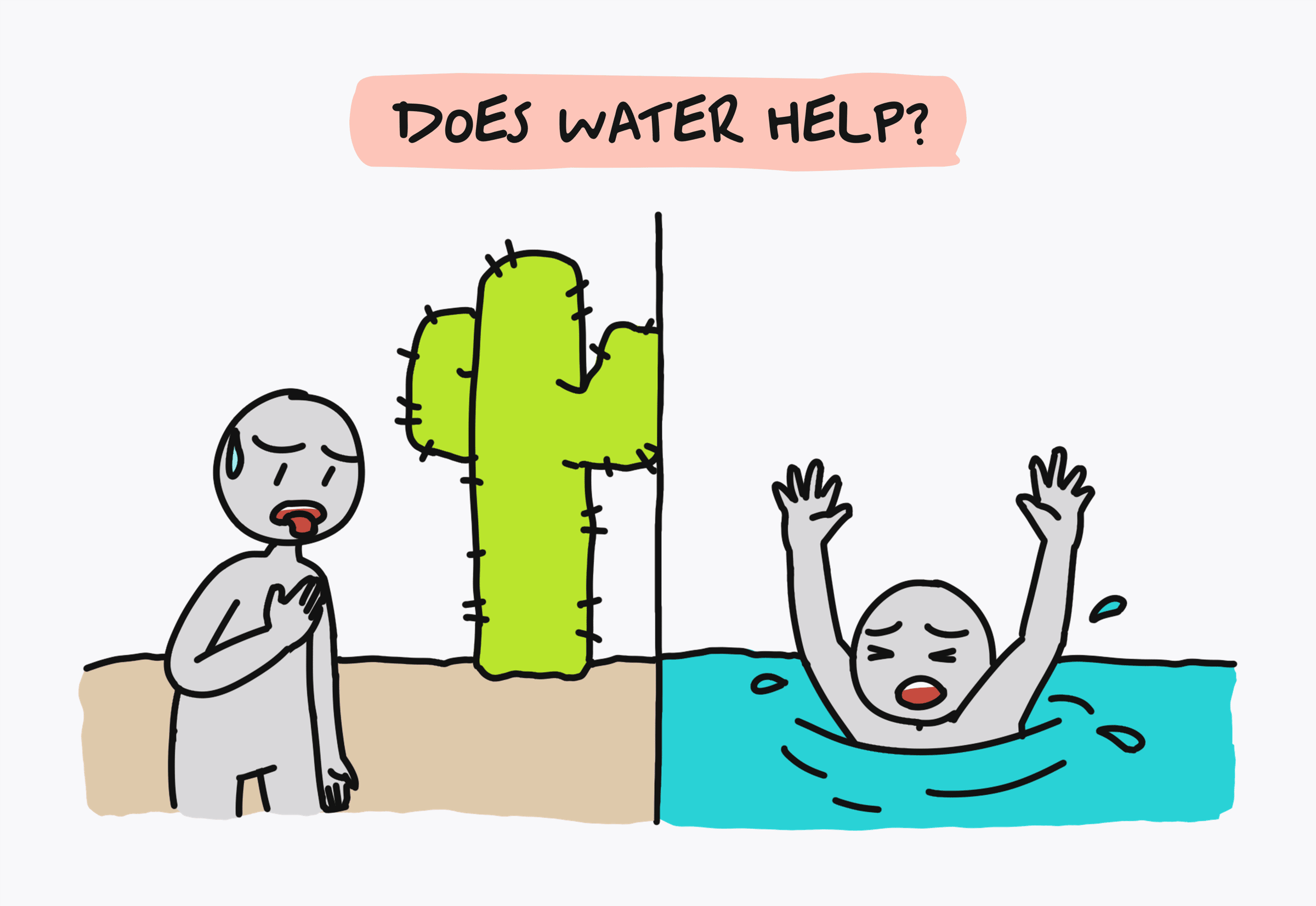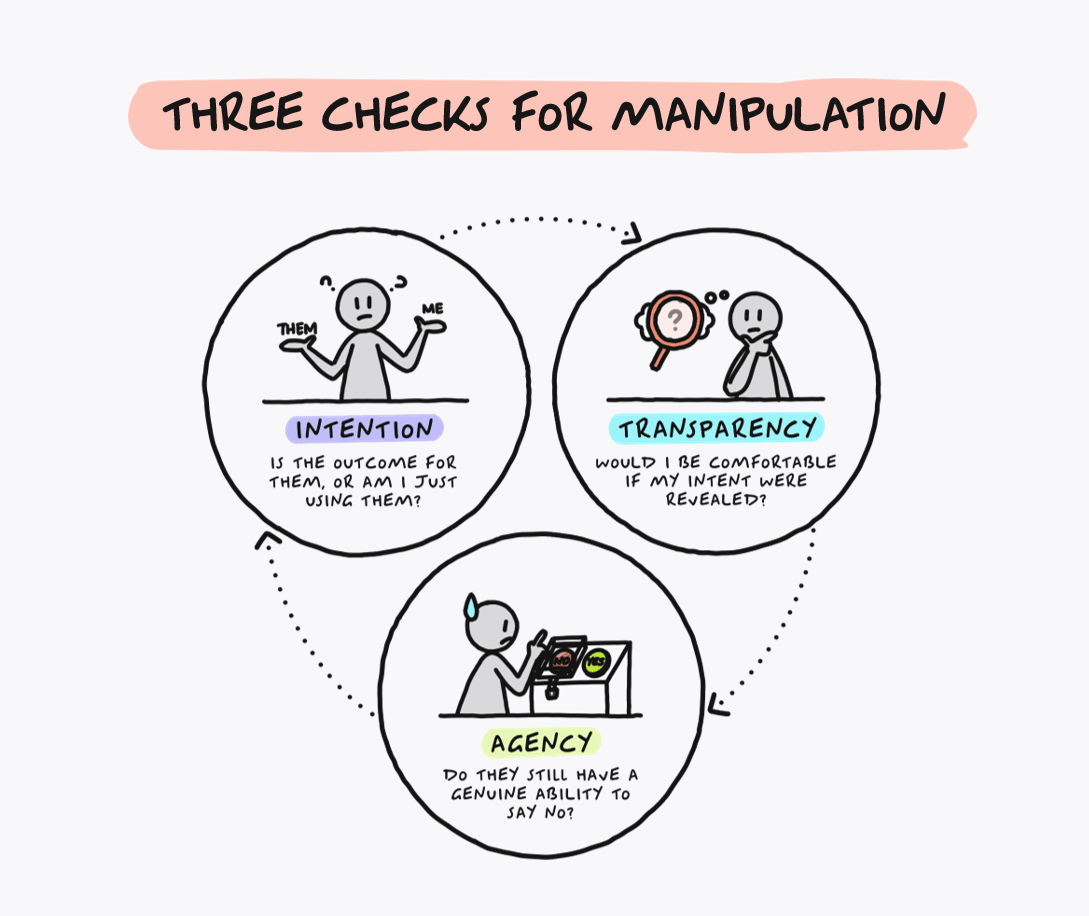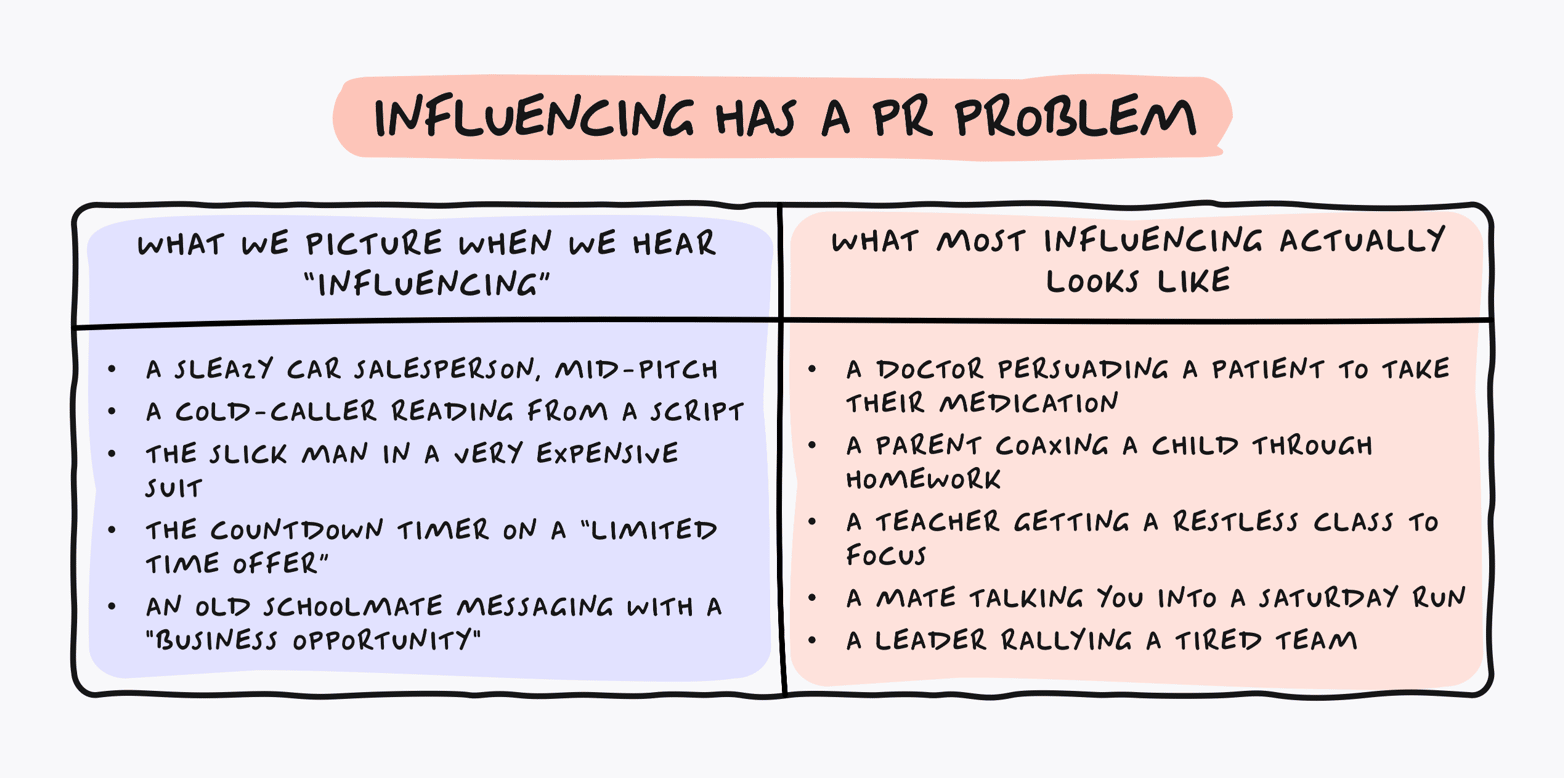
Somewhere along the way, we turned inspiration into the holy grail of behaviour change.
Just think about it.
Companies pay people thousands to stand on a stage and inspire their workforce for an hour. We instruct leaders to start with why, to win hearts and minds, to inspire their teams, to paint a compelling vision.
There's an implicit assumption that all of this will change what people decide to do on a Wednesday morning.
But today, I want to argue that inspiration – the process of stirring emotional conviction in a broader purpose – is a deeply overrated way to influence human behaviour.
Because for inspiration to work, two assumptions need to be true:
1. You can realistically inspire people.
2. Motivate people enough and they'll change.
Both are shakier than they look.
Assumption 1
You can realistically inspire people
When we think about inspiration, we typically consider noble pursuits.
We think about the child who overcomes impossible odds. The athlete who sacrifices everything for an Olympic medal. The nurse who works through the night because someone must.
In these moments, inspiration feels natural and necessary.
Contrast that with what we actually need people to do at work. More often, we’re asking for mundane acts of compliance:
- Update the CRM.
- Format the deck properly.
- Attend our training event.
- Follow the sales script.
- Smile at customers.
And unfortunately, nobody in human history has been moved to tears by the prospect of filing an expense report or selling insurance policies. These tasks are simply too mundane.
Other times, we’re not seeking single actions.
Instead, we’re trying to inspire people in a broader business purpose, in the hope that this will cascade into greater discretionary effort across the board.
But most businesses, most of the time, are also quite mundane.
The majority aren't landing people on the moon or curing cancer. They are selling insurance, software, dog food, workshops, or clothes.
Many leaders clutch at straws to explain why selling their insurance somehow links to a noble purpose, but the link is typically tangential and unconvincing.
I would argue inspiration is not a realistic goal in this context.
We’ve confused what can happen, in a slim set of moments, with something that can realistically happen in the humdrum of daily life.
Assumption 2
Motivate people enough and they'll change
But let’s suppose you do successfully inspire somebody.
They feel emotionally stirred and may even write something earnest in a notebook they bought specially for your conference.
The question now is whether this changes what they do.
At this point, I’d ask you to consider a few things most people are already motivated to do:
- Get 8 hours sleep
- Exercise most days
- Eat a healthy diet
- Use their phone far less
- Drink 2 litres of water daily
Almost everybody wants to do these things. Yet, you’d be hard-pressed to find someone who reliably does them all.
Clearly, motivation ≠ behaviour change.
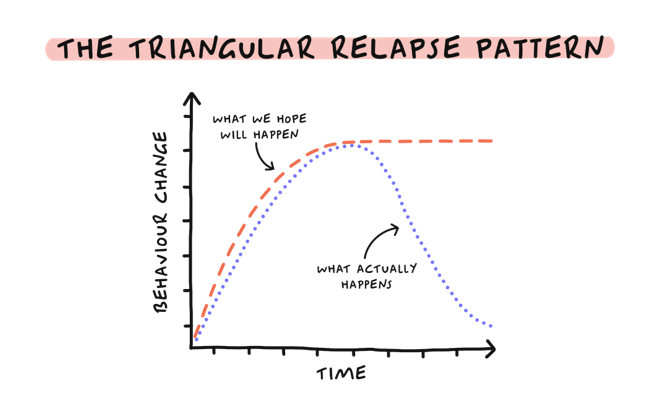
While motivation can dictate behaviour in the short-term, behavioural science shows us that spikes of new intentions rarely last by themselves.
In habit research, this is sometimes described as the ‘triangular relapse pattern’: a sharp change in intention, followed by a disappointing collapse back to normal.1
This same process happens when we inspire.
People may leave our conference or pep talk buzzing, motivated to be a different person. But by next Thursday, they are practically who they were on Monday.
Inspiration is effectively the January gym membership of influencing approaches.
So why, despite these flawed assumptions, has inspiration acquired such heroic status?
Why has inspiration been fetishized?
There are a few factors at play:
1. It fits our gut theory of people.
From childhood, we are what philosophers call ‘natural dualists’.2 We feel as though a conscious self sits at the controls, steering the body with reasons and willpower. So the idea that 'if you give people a good enough reason they will act' feels obviously true.
2. Inspiration feels good even if it fails.
Articulating a rousing vision makes a leader feel visionary. Being inspired feels good too. Both sides get an emotional hit on the spot, regardless of whether anyone actually changes. So we keep doing it.
3. It’s the lazy option dressed as the noble one.
A rousing speech or bit of comms is cheap, fast and entirely in your control. You don’t need to study why the desired behaviour is not happening. You don’t need to look at the systems, policies, incentives, structures, or frictions getting in the way. You just need a brilliant set of reasons to change and a microphone.
So perhaps the love for inspiration is inevitable.
But let's look at what works better.
What actually decides daily behaviour
Inspiration would work beautifully if human behaviour was consciously chosen according to whatever we believe in most.
But that’s not how humans work.
Real humans are tired, distracted, constrained, and instinct-driven. They are mid-reorg, three tabs deep, eleven minutes from a meeting they haven’t prepared for, and vaguely aware that something in the fridge at home may be several weeks out of date.
With a shortage of attention but an overload of stimuli, we cannot possibly choose every behaviour.
So the brain has adapted.
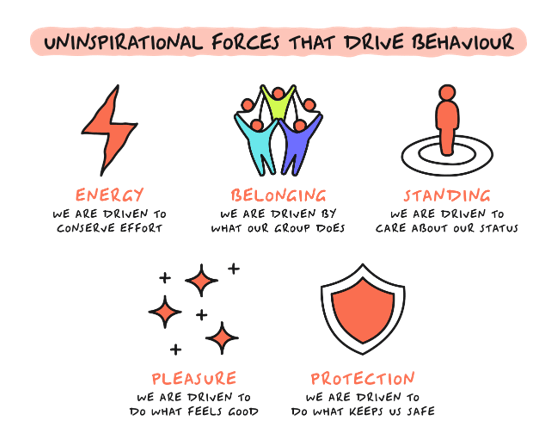
It relies on shortcuts that have helped our species survive over hundreds of thousands of years. None of these shortcuts are as glamorous as inspiration, but they’re all far more powerful in driving what people do.
Here are five of the most critical:
1. Energy.
Our attention and cognitive resources are limited, so the brain has evolved tactics to save effort and favour the easier path.
2. Belonging.
Being cast out of the tribe once meant death, so we evolved to move with the herd and do what those around us do.
3. Standing.
Rank decided who ate, who stayed safe, and who reproduced, so we evolved to care enormously what others think of us.
4. Pleasure.
Pleasure evolved to flag what aided survival, and those rewards were immediate, so we chase what feels good now over what is good later.
5. Protection.
Missing a real threat could kill us, while a false alarm cost little, so we evolved to flinch from risk and cling to whatever feels safe.
When inspiration collides with these ancient instincts, it might win short-term - but the Stone Age brain almost always wins eventually.
Take a familiar example.
Let's imagine you roll out a new CRM with a brilliant reason to use it, and people nod along. They buy into the ‘why’ completely. Perhaps they’re about as inspired as one can possibly be to use a new CRM.
But then reality intervenes.
The tool is clunky and slow, so energy works against it. Nobody else seems to be using it yet, so belonging works against it. Nobody wants to be the first person to log a half-finished deal for everyone else to see, so standing works against it. And there is a suspicion that all this new visibility may really be about deciding who gets cut, so protection works against it.
Will inspiration win?
I doubt it. Especially not for long.
It’s a mistake to believe we can overpower these ancient forces with something as hard-won and fickle as inspiration. You cannot simply sprinkle a compelling purpose over a badly designed behaviour and expect the Stone Age brain to comply.
We must influence people as they are
The answer is not to inspire harder, but rather to stop designing for a fairy-tale human and start appealing to the ancient forces that govern behaviour.
That turns the leader's job into a very different set of questions. Not "how do I inspire them?", but:
- How do we make it take as little energy as possible? (energy)
- How do we make it feel like they'll belong if they do it? (belonging)
- How do we make doing it raise their standing, not risk it? (standing)
- How do we make it feel good in the moment? (pleasure)
- How do we make it feel safe rather than risky? (protection)
Meet enough of these ancient needs and the change becomes practically inevitable, no matter how uninspiring it may be.
Again, let's take the same CRM example as before - but this time, we work with the instincts instead of against them.
Perhaps we strip the form back from fifteen fields to three, so it demands less energy. We show that respected colleagues have already updated theirs, so standing starts to work in your favour. We let people see the rest of the team using it, so belonging pulls them along.
Nobody will be moved to tears.
But by Thursday, people will actually be using the tool.
There is a strange liberation in this. You no longer have to keep trying to inspire people into temporary agreement, just to feel disappointed when real life reasserts itself. You stop chasing inspiration and start designing for the behaviour.
That is, I believe, the value of falling out of love with inspiration.
Uninspiringly yours,
Matt
P.S. Forward this link on to a pal who might find this interesting. They can get The Illogical Edge here.

Notes
[1] Wood, W., & Neal, D. T. (2016). Healthy through habit: Interventions for initiating & maintaining health behavior change. Behavioral Science & Policy, 2(1), 71-83.
[2] Bloom, P. (2004). Descartes' Baby: How the Science of Child Development Explains What Makes Us Human. New York: Basic Books