Here's a sentence you will probably never hear in an office:
"I'm off to influence my colleagues now."
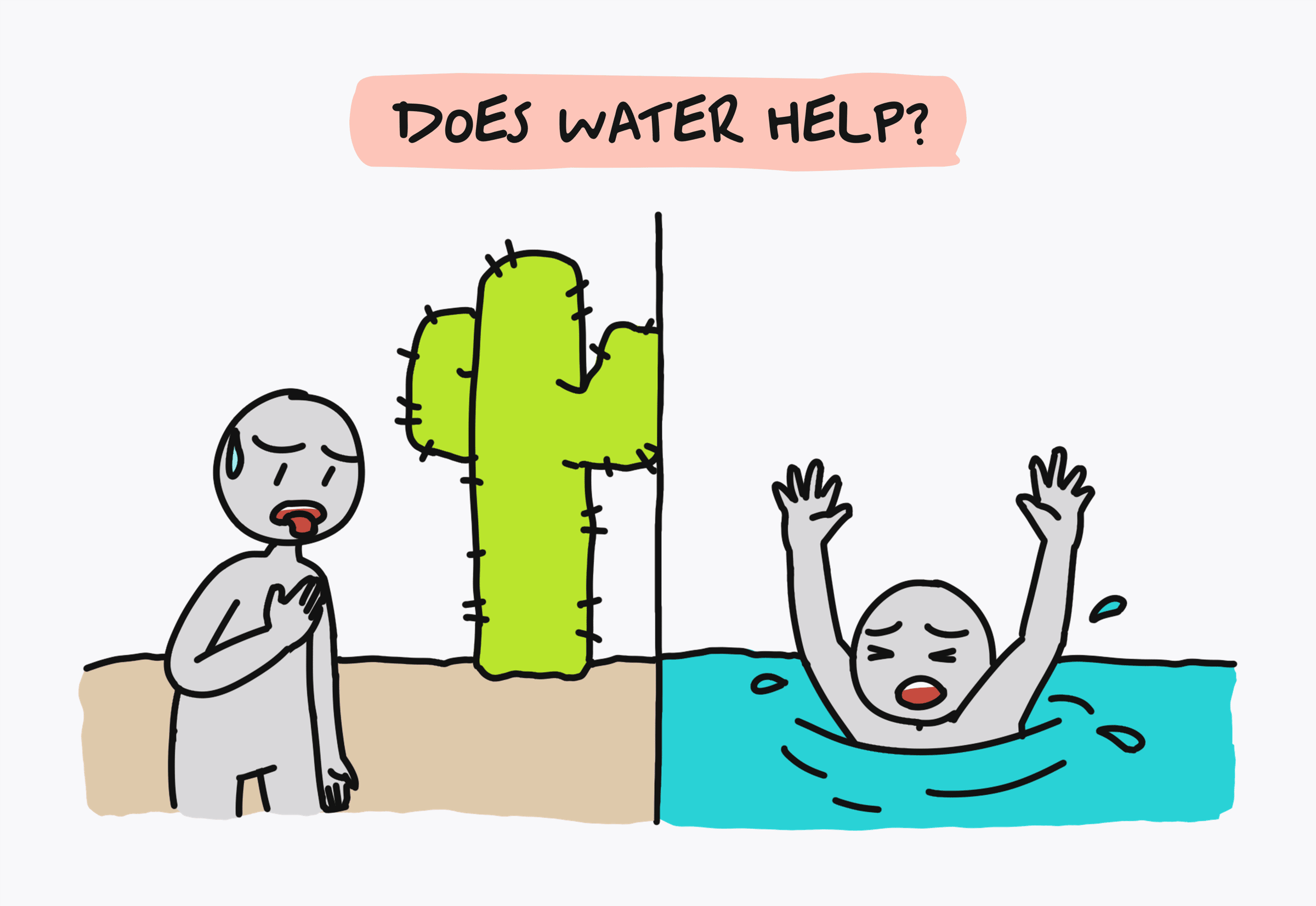
You can happily announce that you're presenting, pitching, or getting buy-in. But if you admit you're trying to 'influence', the room goes a little cold.
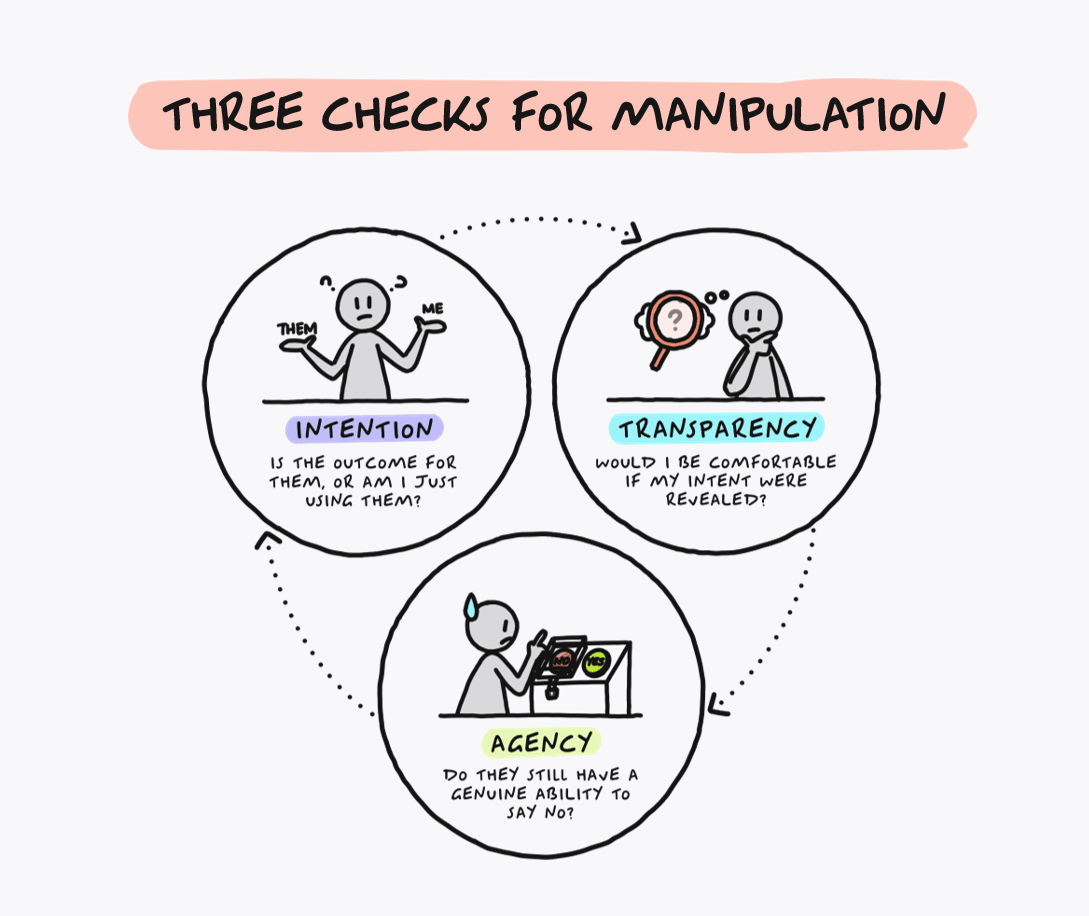
It seems the word 'influence' carries a faint whiff of manipulation.
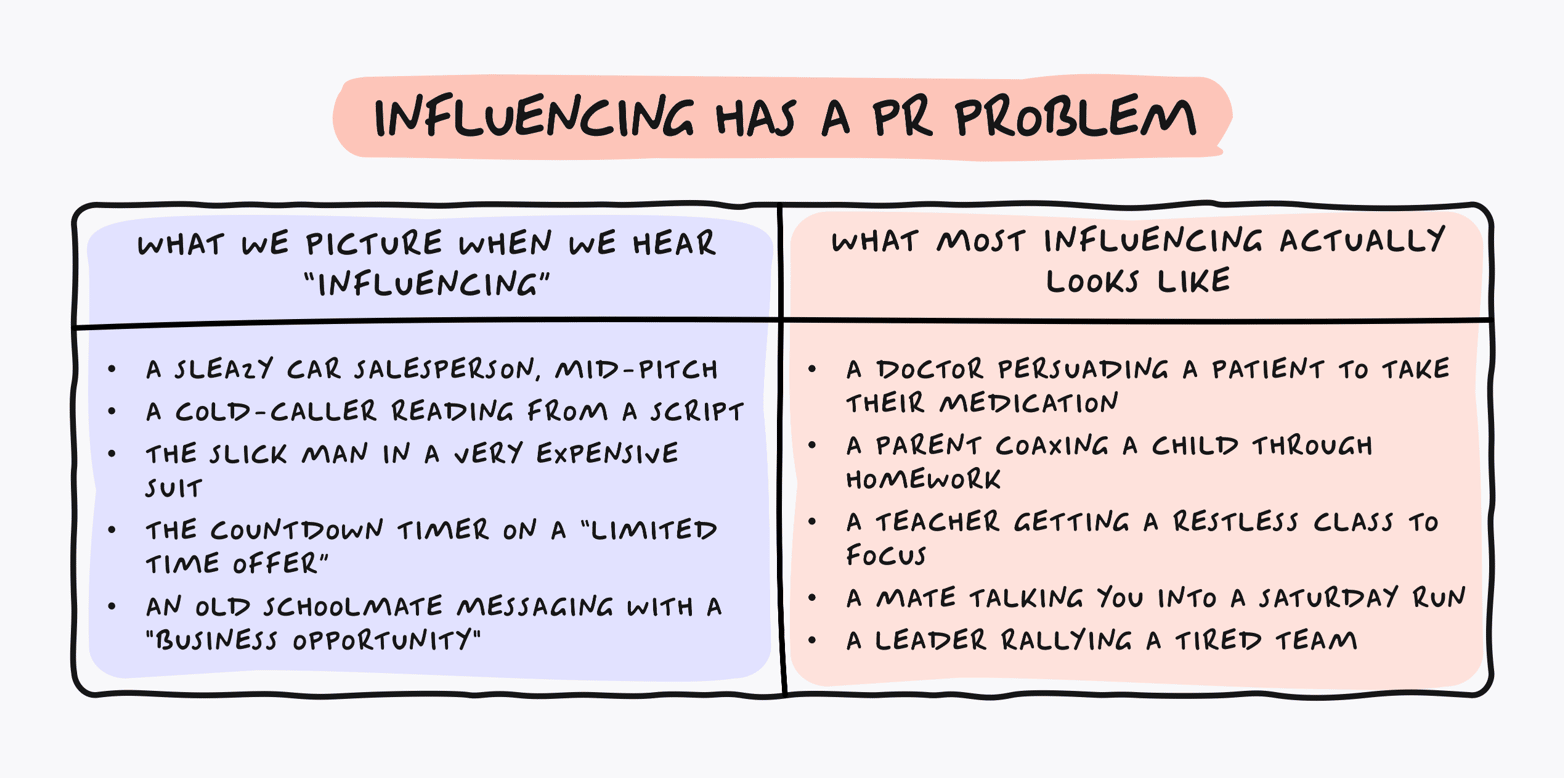
To admit you are trying to influence someone is to confess to something slightly underhand. For some, it conjures the image of a sleazy salesperson, all persistence and ulterior motive.
Today, I want to put this squeamishness on trial.
Because I'd argue it is a little silly that 'influencing' has bad PR. Here are three reasons why.
Reason 1
You cannot opt out of influencing
You are influencing people right now, whether you mean to or not.
Smile at someone and they're more likely to smile back. Swear in a meeting and swearing becomes slightly more normal in that room.
The research on this is quite absurd.
Nicholas Christakis and James Fowler tracked over 12,000 people for 32 years and found that if a close friend becomes obese, your own risk rises by 57%.1 A friend of a friend raises it by 20%. Even a friend's friend's friend – someone you've likely never met – raises it by around 10%.
Similar ripples showed up for smoking, happiness, drinking, and loneliness. Your behaviour influences through your social network well beyond your sight, whether you intend for it to do so or not.
If influencing is unethical, then every human being ever to live has been behaving unethically, simply by existing.
Reason 2
It is often unethical not to influence
Think about these behaviours:
- A parent coaxing a child through their homework
- A teacher getting 30 distracted teenagers to concentrate
- A doctor persuading a patient to take their medication
- A leader aligning a team behind a difficult change
Every person is influencing.
They are deliberately changing what another person thinks and does, but because the intent feels benevolent, we reach for kinder verbs like parenting, teaching, caring, or leading.
I find it strange.
We seem to naturally avoid the word 'influencing' when we talk about doing it for worthy ends.
And in many of these cases, refusing to influence would almost certainly be the less ethical choice.
Just imagine a world in which we all decided that influencing was beneath us.
In this world, the parent decides homework is the child's business and leaves them to it. The doctor hands over the diagnosis, mentions that a medication exists, and leaves the patient to figure out the rest. The leader shares the new strategy in an email and hopes the team somehow aligns itself.
Many would describe this as neglect.
So refusing to influence is not the ethical high ground it appears to be.
Reason 3
People often don't mind being influenced
You might assume influence works best if the person doesn't know you're trying to shift their behaviour.
The evidence says otherwise.
In one study, researchers ran a classic nudge – a default option – and told participants exactly what they were doing and why. The nudge worked anyway.2 Similarly, when researchers surveyed people across multiple countries about a whole menu of health and safety nudges, they found clear majorities approved of them.3
Asked directly, the public actually votes in favour of being influenced, particularly towards things like saving more and smoking less.
There is just a particular type of influencing we dislike.
One study suggests people seem to rate the exact same influencing technique as ethical or sinister depending on whether they liked the goal it served.4 "That's manipulative" often just means "you're steering me somewhere I don't want to go."
So as long as the influencing has a justifiable goal and leaves free will intact, people don't mind it as much as you might think.
So, what is the influencing ick actually about?
So far we've seen that influencing is unavoidable, often admirable, and only sometimes resented.
What it boils down to is that 'influencing' is a very broad camp.
And I believe, to better understand it, we can split this camp according to two dimensions:
- Awareness. Am I influencing deliberately or by accident?
- Intention. Am I influencing in their interests, or just mine?
Ask those two questions and you are left with four types of influencing.
- Accidental good
Accidental + good for them.
This is influence that worked out well without you ever intending it. Perhaps you started taking the stairs at work and a colleague began joining you, or your calmness in a tense meeting gradually settled everyone else down. The outcomes are positive, but you can't really take credit for them, because you never actually decided to influence anyone. - Passive harm
Accidental + bad for them.
This is the unlucky version of the same thing. Perhaps your stress spreads to the people around you, or you roll your eyes at a colleague's suggestion and everyone watching learns something about how new ideas get treated in your team. Nobody set out to cause any damage, but it happens all the same. - Manipulation
Deliberate + bad for them.
This is influence used deliberately to serve yourself at the other person's expense. It might involve hiding your real intentions, pressuring someone into a corner, or steering them towards a decision they would never make with full information. - Ethical influencing
Deliberate + good for them.
This is influence used deliberately towards something that benefits the other person, and often you as well. It looks like the doctor persuading a patient to take their medication, or the teacher finding a way to bring a distracted class back into the lesson. This is obviously the type of influence we're aiming for.
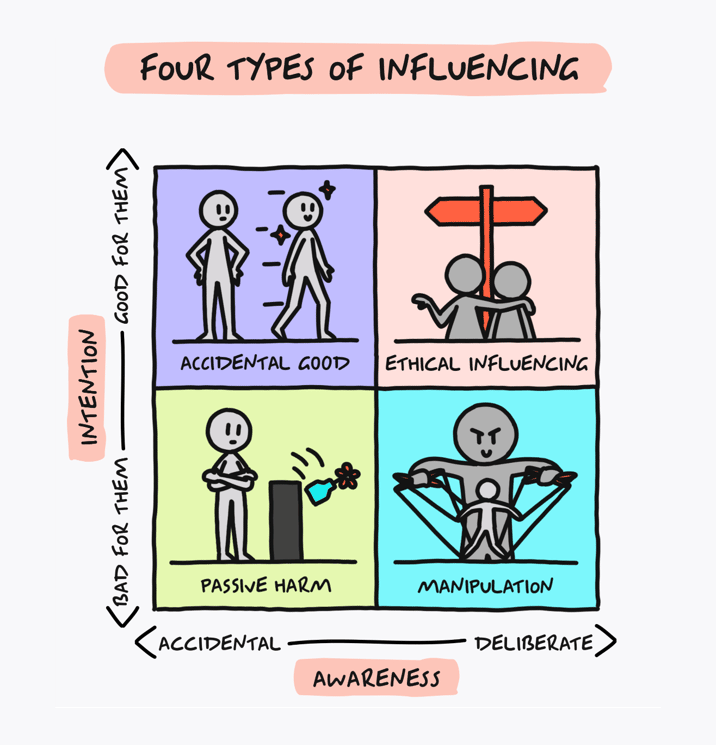
When we see influencing this way, we see that the ick towards influencing is picking up on just one of the four types: manipulation. The other three keep getting hit with friendly fire.
So the answer was never to opt out of influencing.
It's to influence consciously, and with other people's interests in mind.
In the next edition of The Illogical Edge, we'll explore the murky ethical line between influencing and manipulation, so you can stay on the right side of it.
Until then, please do influence.
Doing so will not make you American Psycho.
Forever trying to influence you,
Matt
P.S. Forward this on to a pal who needs to influence. They can get The Illogical Edge here.

Notes
[1] Christakis, N. A., & Fowler, J. H. (2007). The spread of obesity in a large social network over 32 years. New England Journal of Medicine, 357(4), 370–379.
Also see: Christakis, N. A., & Fowler, J. H. (2013). Social contagion theory: examining dynamic social networks and human behavior. Statistics in medicine, 32(4), 556-577.
[2] Bruns, H., Kantorowicz-Reznichenko, E., Klement, K., Jonsson, M. L., & Rahali, B. (2018). Can nudges be transparent and yet effective? Journal of Economic Psychology, 65, 41–59.
[3] Sunstein, C. R., Reisch, L. A., & Kaiser, M. (2019). Trusting nudges? Lessons from an international survey. Journal of European Public Policy, 26(10), 1417–1443.
[4] Tannenbaum, D., Fox, C. R., & Rogers, T. (2017). On the misplaced politics of behavioural policy interventions. Nature Human Behaviour, 1, 0130.