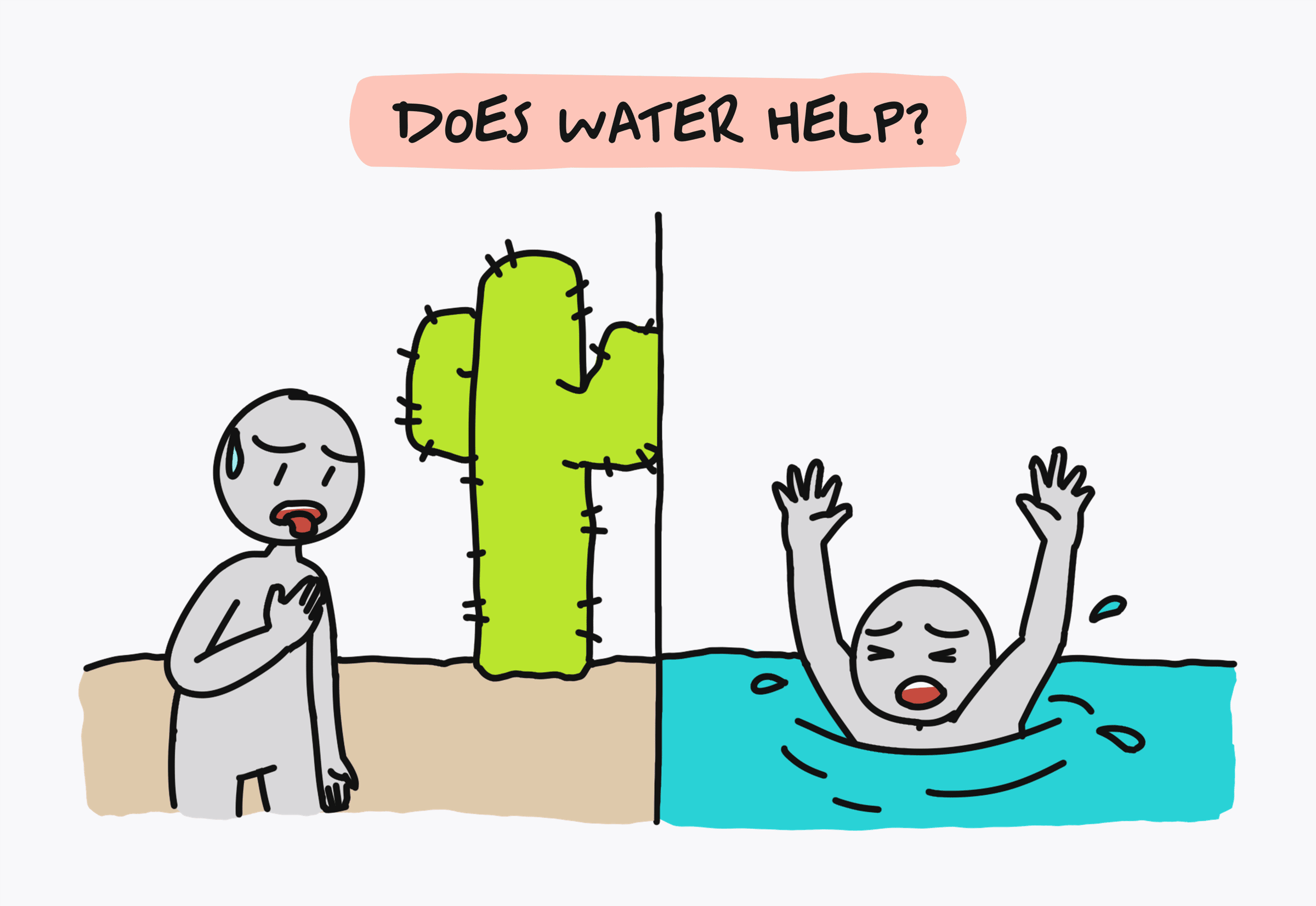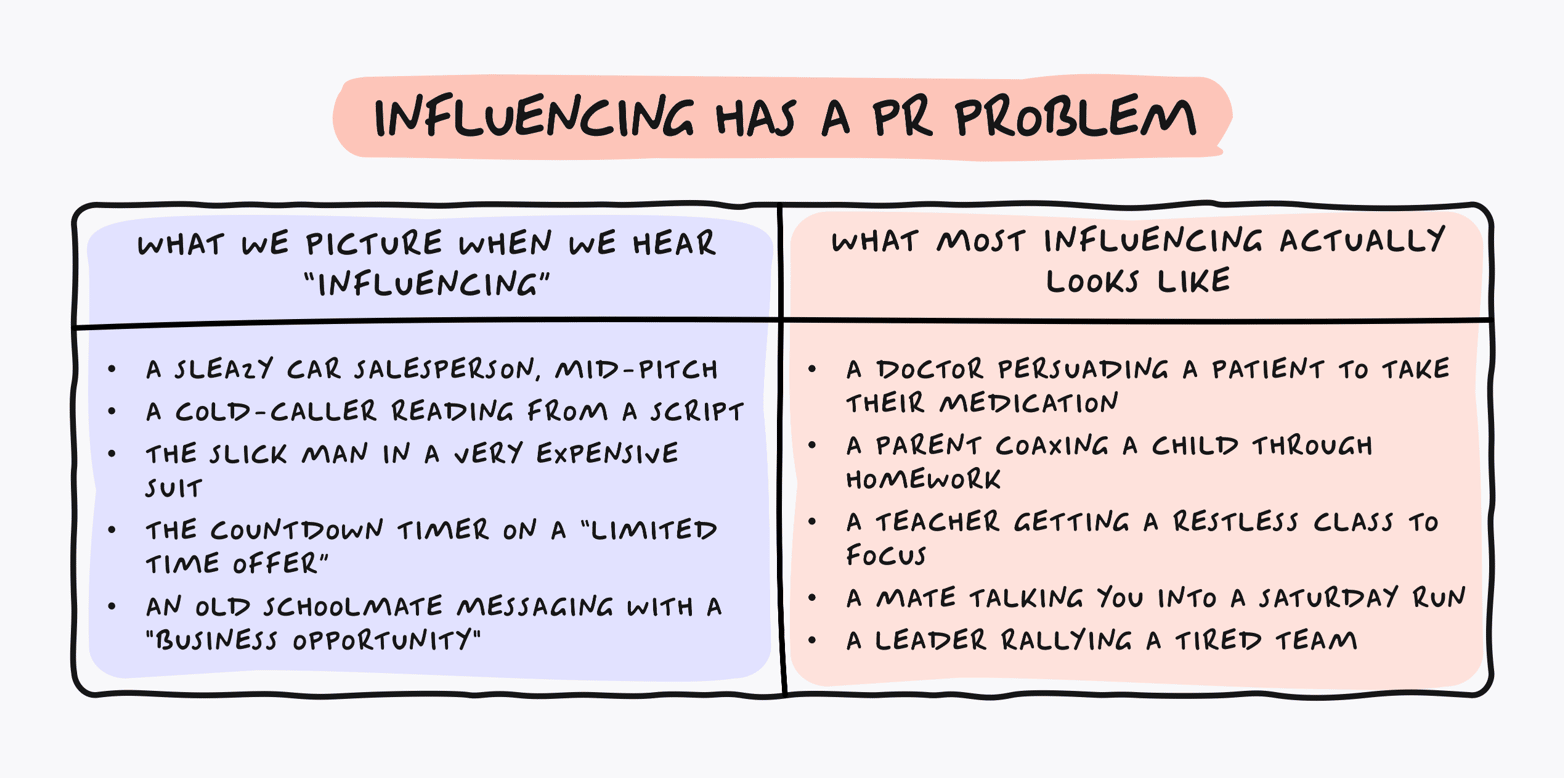
Is this influencing, or is it manipulation?
- De Beers spent decades teaching the world that an engagement ring should cost two months' salary, so people would spend more.
- Booking.com tells you there are "only 2 rooms left at this price", which is technically true.
- Uber has reportedly sent drivers prompts like "you're only $10 away from making $300 – are you sure you want to go offline?"
As these examples show, the line between influencing and manipulating is sometimes a little murky.
Today, let’s look at how to navigate it so you can influence without guilt.
Nobody can quite define the difference
Here’s how both are defined in the dictionary:
Influence: "The capacity to have an effect on the character, development, or behaviour of someone."
Manipulate: "To control or influence a person cleverly, unfairly, or unscrupulously."
So the difference mainly hangs awkwardly on two subjective words: "unfairly" and "unscrupulously".
Cass Sunstein, the co-author of Nudge, recently wrote a book called Manipulation. At the start of his book, he worked through 16 possible definitions, before concluding that an exact definition is close to impossible.
Equally, philosophers have been trying for more than two thousand years and haven't done much better.
This is inconvenient.
Because while academics can debate definitions forever, you and I still have to influence people with a clean conscience this week.
So let me suggest three practical checks that cover almost all the debates.
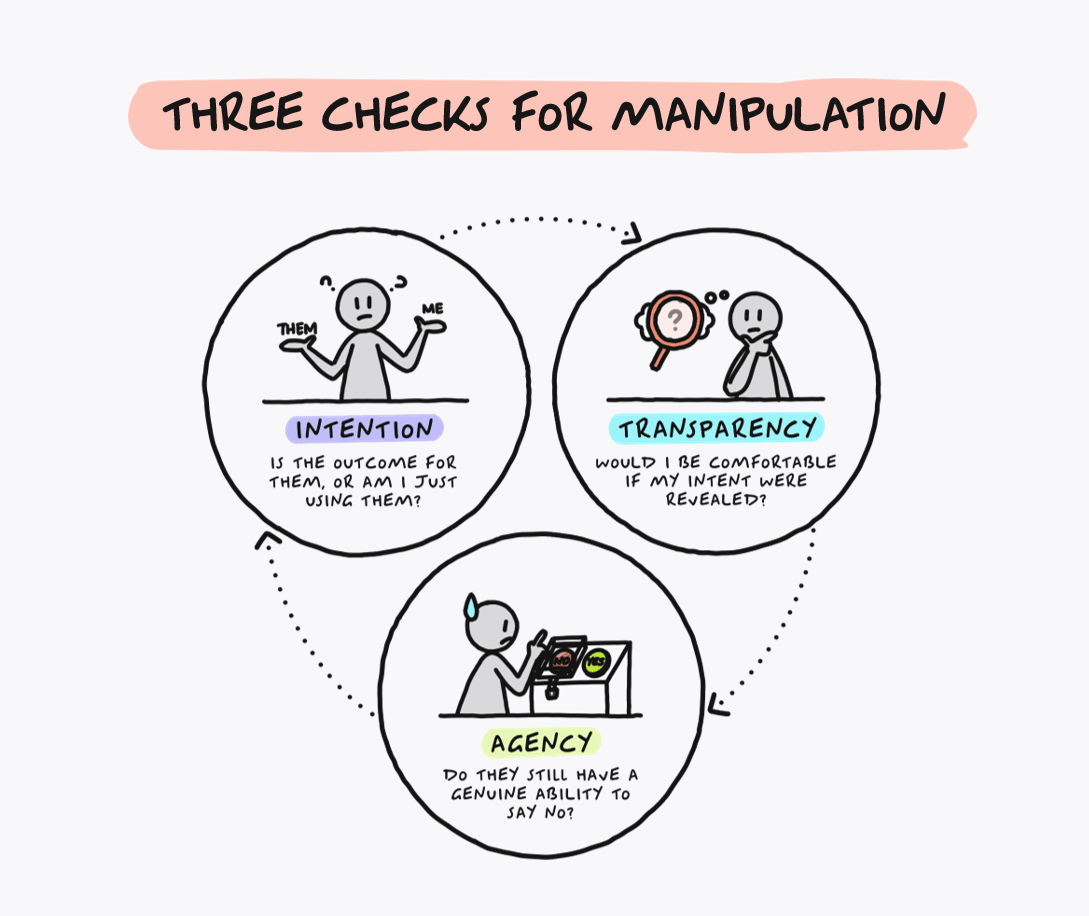
Check 1: Intention
Am I doing this at their expense?
There's nothing wrong with having your own interests.
The problems start when the other person becomes a means to your end. If their welfare becomes secondary or irrelevant, you're using them – which sits firmly in the manipulation camp.
Think of:
- App notifications engineered to maximise your screen time
- The extended warranty that statistically almost never pays out
- The salesperson recommending the product with the most commission
These all serve the influencer, and nobody else.
Check 2: Transparency
Would I be comfortable if they knew exactly what I was doing?
It would be a mad world if you had to announce your intentions before every conversation: “Hello, I'm going to try to influence you to buy my product.”
The more useful test is retrospective.
If this person later discovered what you did, would you be comfortable explaining yourself? If the answer is no, you may have drifted into manipulation.
Think of:
- The company posting five-star reviews of itself
- The countdown timer that resets when you refresh the page
- The recruiter mentioning "other interested candidates" who don't exist
These are hard to justify without some form of mental gymnastics.
Check 3: Agency
Can they still easily say no?
Ethical forms of influence leave the other person with a genuine ability to choose.
The important word here is 'easily'. Manipulation rarely removes the choice altogether. Instead, it hides the alternatives, or it makes the 'no' expensive in time, effort, or awkwardness.
Think of:
- Subscriptions that take a click to start and a phone call to cancel
- Asking a junior person if they can work late in front of all their peers
- Cookie banners where "accept" is one tap and "reject" is four menus deep
In every case, you could technically still say no. The design just raises the price of it until most people stop trying.
But what about when the three checks disagree?
Picture the three checks as dials.
If all three come back with a ‘yes’, you're probably influencing.
If all three come back with a ‘no’, you're probably manipulating.
But real life is rarely that tidy.
Picture spending a month being genuinely helpful to a colleague, knowing that next quarter you'll need their backing for your project.
Intention: mixed.
Transparency: debatable.
Agency: probably fine.
Or imagine pitching a project you’re convinced is the right way to go. You present a deck where every number is accurate, but the one piece of evidence pointing the other way somehow didn't make the cut.
Intention: probably fine.
Transparency: probably not fine.
Agency: all good.
So, are these two examples above board?
Even professional ethicists would disagree.
The German philosopher Immanuel Kant famously argued every lie was wrong, even the kind ones. Jeremy Bentham argued the opposite: if a lie leaves everybody better off, it’s the right thing to do.
So rather than pretend there's a universal line, let’s look at something more practical.
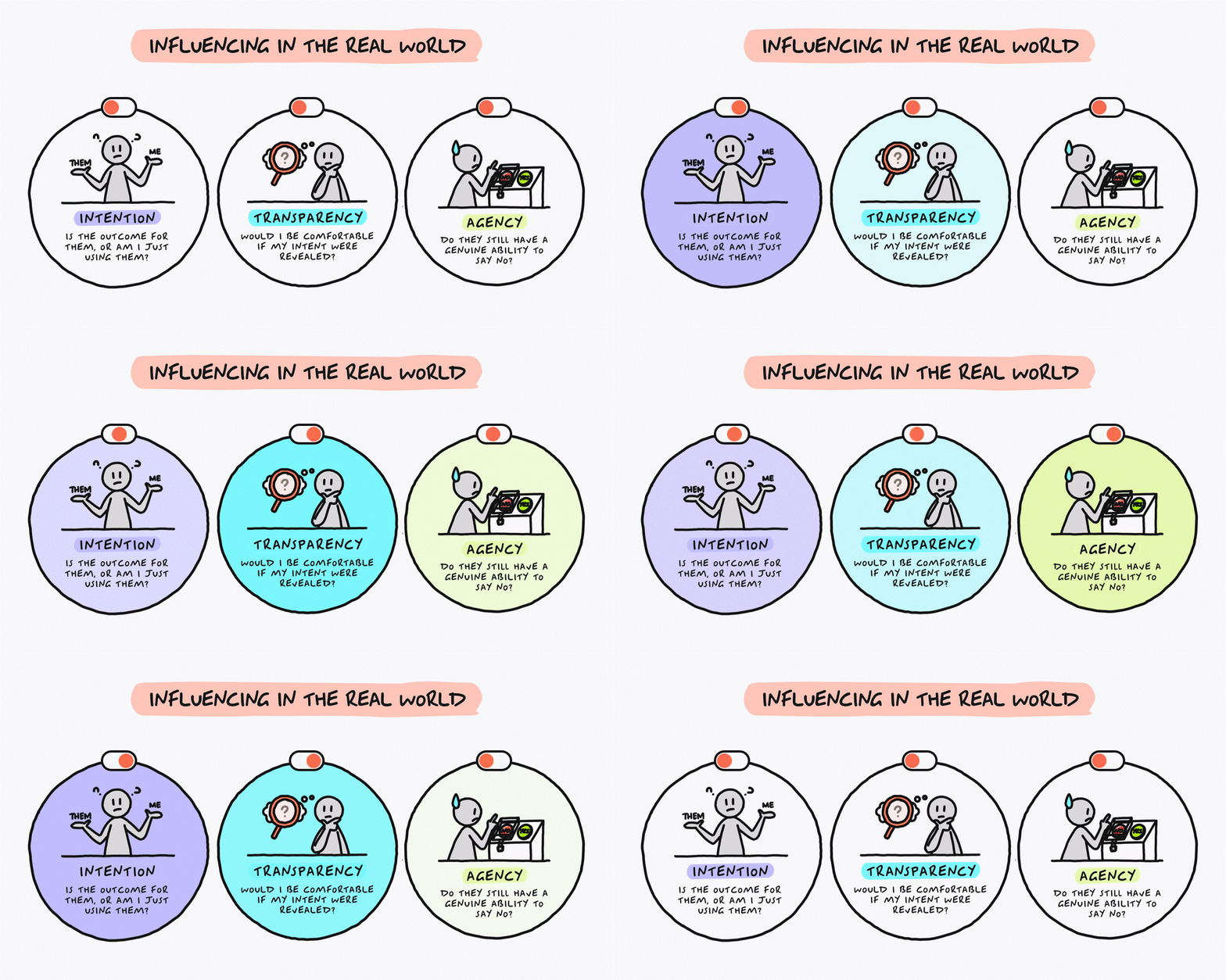
How to stay on the right side of the line
For each of the three checks, you can sometimes take steps to make sure you steer yourself away from manipulation.
Failed intention check ➝ Rebalance the deal
Find something that makes this genuinely good for them too – time, credit, help with their own problem, or simply a smaller ask. And if there's honestly nothing in it for them, you can just say so: "This one's a favour to me. I'd owe you."
Failed transparency check ➝ Declare it
Behind almost every unsayable tactic sits a real, sayable need. The fake Friday deadline usually means "I want a buffer in case something goes wrong". The invented rival candidates usually mean "I can't hold this offer open for long".
So perhaps you could say that instead:
- "It's due Monday, but if you get it to me by Friday, we'll have time to fix any problems."
- "I can't hold the role open beyond this week, so I do need an answer."
You've fixed it when you could read your sentence aloud to the person it's aimed at.
Failed agency check ➝ Make the 'no' cheaper
Perhaps you say the 'no' out loud for them: "And honestly, it's fine to say no to this."
Strangely, this often makes you more persuasive.
There's evidence to suggest adding phrases like "but you are free to refuse" increases your chances that people say yes to your requests.1
Then honour whatever comes back. A door only counts if someone can walk through it without being punished, guilt-tripped, or asked again next week.
Pass the three checks and you've earned the right to use everything in The Illogical Edge with a completely clean conscience.
Transparently yours,
Matt
P.S. Forward this on to a pal who needs to influence. They can get The Illogical Edge here.

Notes
[1] Carpenter, C. J. (2013). A meta-analysis of the effectiveness of the "but you are free" compliance-gaining technique. Communication Studies, 64(1), 6–17.